

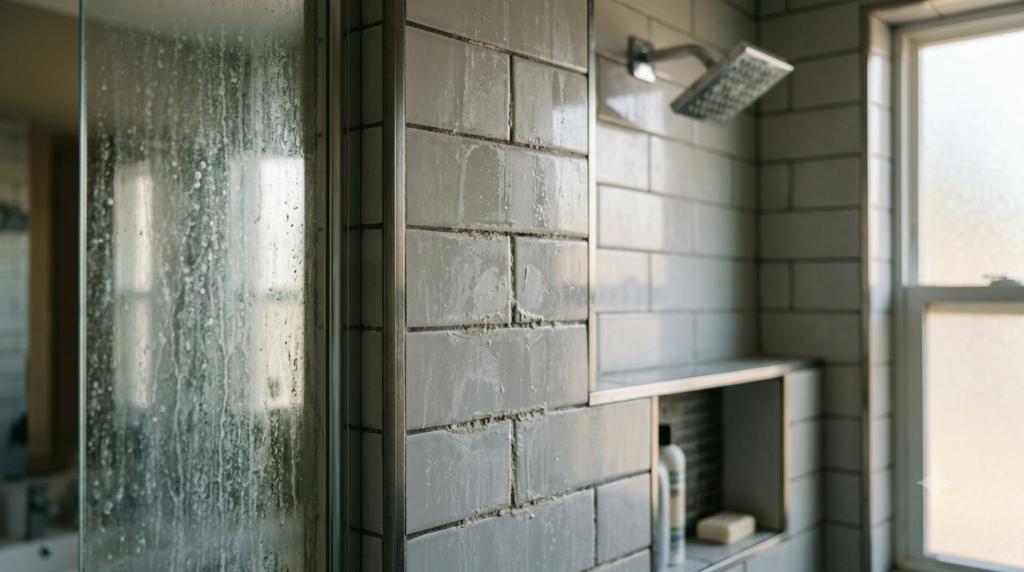
If you’ve lived in Arizona for any length of time, you’ve probably noticed the same frustrating pattern.
You clean your shower thoroughly. Everything looks great for a few days. Then the cloudy residue returns, the grout starts looking dull again, and those stubborn mineral stains seem impossible to eliminate.
The problem isn’t your cleaning routine.
The problem is Arizona’s hard water.
Many areas throughout Arizona experience water hardness levels far above what experts classify as “very hard.” The minerals found in local water supplies leave deposits behind every time water evaporates from your shower surfaces.
Over time, those deposits do far more than create cosmetic stains.
They can slowly damage grout, weaken protective sealants, and contribute to tile problems that no amount of scrubbing can fix.
This guide explains how Arizona’s hard water affects shower tile, how to distinguish cosmetic issues from structural damage, and when professional repairs become necessary.
Why Arizona’s Water Is So Hard on Bathrooms
Arizona receives water from multiple sources, including:
- Colorado River water
- Salt River Project water
- Groundwater aquifers
As water travels through Arizona’s mineral-rich soil and rock formations, it absorbs significant amounts of:
- Calcium
- Magnesium
- Dissolved minerals
These minerals remain in the water when it reaches your home.
Every hot shower leaves tiny mineral deposits behind as the water evaporates.
Over months and years, those deposits begin accumulating on:
- Tile surfaces
- Grout lines
- Shower glass
- Fixtures
- Drain areas
Why Showers Experience More Damage
Several factors make showers especially vulnerable.
Daily Exposure
Most showers are used every day, often multiple times.
Repeated exposure accelerates mineral accumulation.
Heat Increases Evaporation
Hot water evaporates faster than cold water.
Faster evaporation leaves behind concentrated mineral deposits.
Grout Is Naturally Porous
Grout is designed to absorb and release small amounts of moisture.
Unfortunately, this also allows minerals to penetrate below the surface.
Over time, mineral buildup can:
- Break down sealants
- Roughen grout surfaces
- Increase staining
- Create spaces where mold and mildew develop
Cosmetic Staining vs. Structural Damage
Not every hard-water issue requires professional repair.
The key is identifying whether the problem is cosmetic or structural.
Surface Staining (Usually Cleanable)
These conditions generally respond to proper cleaning and maintenance:
- White mineral film on tile
- Cloudy shower glass
- Scale around shower fixtures
- Minor discoloration
Structural Damage (Not Cleanable)
These warning signs indicate deeper problems:
- Crumbling grout
- Missing grout sections
- Cracked grout lines
- Hollow-sounding tile
- Loose tile
- Persistent moisture issues
- Evidence of water behind walls
When structural damage appears, cleaning products won’t solve the underlying problem.
The Fingernail Test
One of the easiest ways to evaluate grout condition is the fingernail test.
Run your fingernail firmly along a grout joint.
Good Condition
If the grout remains solid and intact, you’re likely dealing with surface staining.
Potential Failure
If grout flakes, crumbles, or leaves a noticeable groove, structural deterioration may already be occurring.
This often indicates the need for repair or replacement.
Five Signs You’re Past the Cleaning Stage
1. Grout Crumbles or Falls Apart
Healthy grout should remain firm.
If it breaks apart under light pressure, the protective structure has likely failed.
2. Mold Keeps Returning
Recurring mold growth often indicates moisture penetration rather than surface contamination.
If mold returns shortly after cleaning, water may be getting behind the tile.
3. Tiles Sound Hollow
Tap several tiles gently.
A hollow sound frequently indicates that the tile has separated from the substrate underneath.
4. Persistent Musty Odors
A musty smell that won’t disappear may signal trapped moisture behind walls or under tile surfaces.
Surface cleaners cannot reach these hidden areas.
5. Stains Return Almost Immediately
When mineral staining returns within days of cleaning, grout sealers may have deteriorated beyond the point where routine maintenance remains effective.
How to Slow Hard Water Damage
If your shower still falls into the cosmetic category, several simple habits can extend the life of your tile and grout.
Squeegee After Every Shower
Removing standing water is one of the most effective ways to reduce mineral buildup.
Use a pH-Neutral Cleaner
Harsh chemicals can damage grout and protective sealants.
Choose products specifically designed for tile and grout maintenance.
Reseal Grout Regularly
Arizona homeowners should generally reseal grout every two to three years.
Areas with especially hard water may benefit from more frequent inspections.
Run the Exhaust Fan
Running the bathroom exhaust fan for approximately 20 minutes after showering helps reduce moisture levels.
Consider Epoxy Grout During Future Renovations
Epoxy grout offers superior resistance to:
- Moisture
- Staining
- Mineral penetration
- Mold growth
Compared to traditional cement grout, it typically requires less maintenance.
When Cleaning Is No Longer Enough
Many homeowners assume their only choices are cleaning or a complete remodel.
In reality, several repair options exist.
Regrouting
If the tile remains in good condition,tile replacing deteriorated grout may fully resolve the issue.
Tile Repair
Individual cracked or loose tiles can often be replaced without rebuilding the entire shower.
Full Tile Replacement
Replacement becomes necessary when:
- Damage is widespread
- Moisture has reached wall materials
- Waterproofing systems have failed
- Tile detachment affects large areas.
A professional inspection helps determine which solution makes the most sense.
Key Takeaways
- Arizona’s hard water contains significant mineral content that accumulates on tile and grout.
- Surface staining can often be cleaned.
- Crumbling grout, recurring mold, and hollow tile usually indicate deeper issues.
- Regular maintenance can slow hard-water damage.
- Not every shower requires complete replacement.
- Regrouting and targeted repairs often provide effective solutions.
The Bottom Line
Hard water is a reality of life in Arizona.
The damage it causes doesn’t have to be.
Understanding the difference between cosmetic staining and genuine structural deterioration helps homeowners make informed decisions and avoid unnecessary expenses.
Whether your shower needs a simple resealing, professional regrouting, targeted tile repair, or a complete renovation, identifying the actual problem is always the first step.
Unique Services Contractor Co LLC provides professional tile, grout, and shower assessments for homeowners throughout Arizona. Our team helps determine whether your shower needs maintenance, repair, or replacement—so you can make the right decision before investing in the wrong solution.
Contact Unique Services Contractor Co LLC today to schedule a professional shower tile and grout evaluation.
Both. Mineral deposits initially cause cosmetic staining but can eventually weaken grout and damage protective sealers.
Most professionals recommend resealing every two to three years depending on water conditions and usage.
Small areas can sometimes be repaired, but widespread deterioration often requires professional assessment.
Water softeners can significantly reduce future mineral buildup but cannot reverse existing damage.
Vinegar can be used cautiously on porcelain and ceramic surfaces but should generally be avoided on natural stone because it may cause etching.
Yes. Epoxy grout is significantly less porous and more resistant to staining, moisture, and mineral penetration.
In most cases, yes. Hollow-sounding tile often indicates a loss of adhesion that should be evaluated.
If the grout remains structurally sound, cleaning and resealing may be sufficient. Crumbling grout generally requires repair or replacement.