

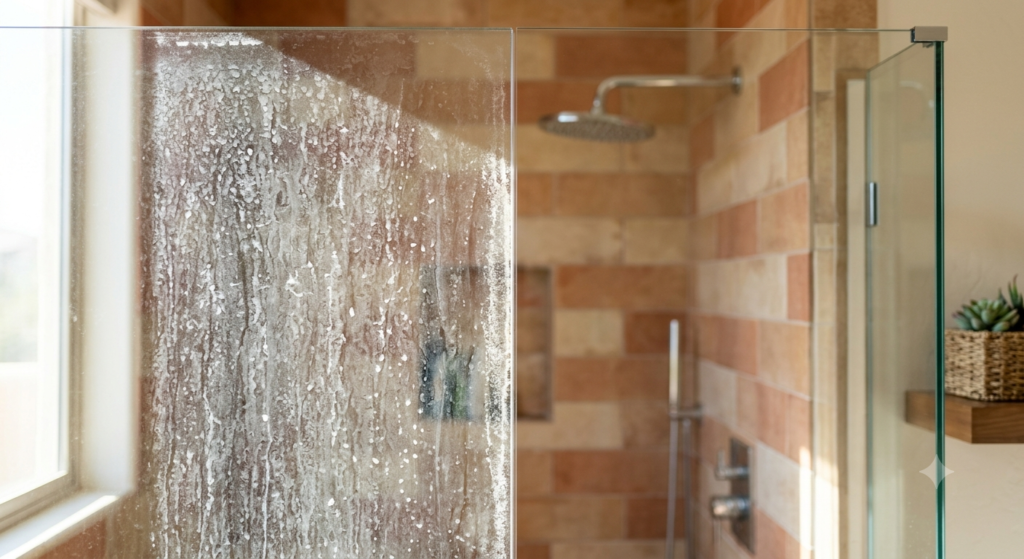
If you live in Scottsdale, you’ve probably noticed a white, cloudy film building up on your shower glass no matter how often you clean it.
That film isn’t soap scum.
It’s hard-water mineral buildup, and it’s one of the most common bathroom maintenance issues homeowners face throughout Scottsdale and the greater Phoenix area.
Left untreated, those minerals don’t just make your shower look dirty. Over time, they can permanently damage the surface of the glass, leading to costly repairs or complete glass replacement.
This guide explains what’s actually in Scottsdale’s water, how it affects shower glass, how to identify permanent damage, and what solutions work best in Arizona’s climate.
What’s Actually in Scottsdale’s Water?
Scottsdale receives water from a combination of:
- Colorado River water
- Local groundwater
- Salt River Project water sources
As water travels through Arizona’s mineral-rich geology, it absorbs significant amounts of dissolved minerals.
According to local water quality reports, Scottsdale water typically measures between 12 and 17 grains per gallon, placing it firmly in the hard to very hard water category.
The primary minerals responsible for shower-glass damage are:
Calcium
Calcium leaves behind the white chalky residue commonly seen on shower doors, faucets, and tile.
Magnesium
Magnesium contributes to stubborn water spotting and accelerates mineral accumulation.
Every time water evaporates from your shower glass, these minerals remain behind.
Because Scottsdale’s climate is extremely dry, evaporation happens quickly, causing mineral deposits to accumulate much faster than they would in more humid regions.
How Hard Water Damages Shower Glass
Hard-water damage usually occurs in two distinct stages.
Understanding the difference can help determine whether your shower glass can still be restored or whether replacement is the better option.
Stage 1: Mineral Film (Removable)
During the early stages, minerals accumulate on the surface of the glass.
Common symptoms include:
- White haze
- Water spots
- Cloudy appearance
- Reduced transparency
At this stage, the deposits remain on the surface and can usually be removed through proper cleaning techniques.
Stage 2: Glass Etching (Permanent Damage)
If mineral deposits remain on the glass for extended periods, they begin interacting with the glass surface itself.
Over time, they create microscopic pits and surface damage known as etching.
Once etching occurs:
- Standard cleaning products stop working
- Vinegar treatments become ineffective
- Water spots return immediately
- The glass permanently loses clarity
When etching becomes severe, replacement is often more practical than restoration.
Signs Your Shower Glass May Already Be Etched
Many Scottsdale homeowners mistake etched glass for simple hard-water stains.
Watch for these common indicators:
Cloudiness That Never Fully Disappears
Even after deep cleaning, the glass remains hazy.
Water Spots Return Immediately
You clean the glass, yet spots seem to reappear within hours.
Rough Surface Texture
Dry glass feels slightly gritty or rough when touched.
Rainbow or Distorted Reflections
Light reflecting off etched glass often appears uneven or discolored.
Increasing Cleaning Effort
Each cleaning session requires more time while delivering fewer results.
If multiple symptoms are present, the damage may have progressed beyond removable mineral buildup.
Cleaning Methods That Actually Help
If your glass hasn’t reached the etching stage, consistent maintenance can dramatically extend its lifespan.
Use a Squeegee After Every Shower
This remains the most effective habit for preventing mineral buildup.
Removing water before it evaporates prevents minerals from being left behind.
Apply a Weekly Vinegar Treatment
A simple process:
- Soak paper towels in white vinegar.
- Press them against affected areas.
- Leave them for 15–20 minutes.
- Wipe clean and rinse thoroughly.
Choose Microfiber Cloths
Microfiber removes mineral deposits safely without scratching the glass.
Avoid Abrasive Scrubbers
Harsh pads can scratch the surface and accelerate future damage.
Dry the Glass Completely
Any remaining moisture continues the buildup cycle.
While these methods help significantly, they do not completely eliminate hard-water exposure.
The Best Long-Term Solution: Protective Shower Glass
For homeowners planning a bathroom remodel or shower upgrade, factory-coated shower glass offers the most effective long-term protection.
Common options include:
- Hydrophobic glass coatings
- Anti-etch coatings
- Easy-clean glass systems
These treatments create a protective barrier that reduces mineral adhesion.
Instead of sticking to the glass, water beads up and rolls away.
Benefits of Coated Shower Glass
- Less mineral buildup
- Easier cleaning
- Better long-term appearance
- Reduced maintenance
- Extended glass lifespan
Why Frameless Shower Glass Performs Better
Frameless shower enclosures offer additional advantages in Scottsdale’s hard-water environment.
Traditional framed systems contain tracks and corners that trap:
- Water
- Soap residue
- Mineral deposits
Frameless systems eliminate many of these problem areas.
Benefits include:
- Easier cleaning
- Less buildup
- Modern appearance
- Improved durability
- Reduced maintenance requirements
For many Arizona homeowners, coated frameless glass provides the best long-term value.
Cost Comparison: Protection vs. Replacement
Option | Typical Cost Range | Expected Lifespan |
Standard Shower Glass | $600–$1,200 | 3–5 Years |
Coated Shower Glass | $900–$1,800 | 8–12 Years |
Glass Replacement Due to Etching | $700–$1,500 | May Repeat Every Few Years |
Over time, investing in protective glass often costs less than repeatedly replacing damaged panels.
Arizona Factors That Accelerate Shower Glass Damage
Scottsdale homeowners face several conditions that make hard-water damage worse than in many other parts of the country.
Extremely Hard Water
Mineral concentrations remain consistently high year-round.
Low Humidity
Rapid evaporation leaves minerals behind more quickly.
Frequent Shower Use
Arizona’s hot climate often means multiple showers per day.
Hard-Water Deposits on Adjacent Surfaces
The same minerals affecting shower glass also impact:
- Tile
- Grout
- Fixtures
- Shower doors
Together, these conditions create one of the most challenging environments for maintaining clear shower glass.
Key Takeaways
- Scottsdale water contains high levels of calcium and magnesium.
- Hard-water spots begin as removable deposits but eventually become permanent etching.
- Daily squeegeeing significantly slows mineral accumulation.
- Vinegar treatments help remove surface deposits before permanent damage occurs.
- Coated shower glass provides the best long-term protection.
- Frameless glass systems reduce maintenance and buildup.
- Replacing etched glass is often more expensive than preventing damage in the first place.
The Bottom Line
Hard-water damage is one of the most common bathroom issues facing Scottsdale homeowners.
The combination of mineral-rich water, low humidity, and frequent shower use creates ideal conditions for glass staining and etching.
Fortunately, early intervention can dramatically extend the life of your shower enclosure.
Regular maintenance, protective coatings, and modern frameless glass systems can reduce cleaning requirements while helping your shower maintain its appearance for years.
If you’re considering a bathroom upgrade or replacing damaged shower glass, Unique Services Contractor Co LLC can help you select durable shower solutions specifically designed for Scottsdale’s hard-water conditions.
Contact Unique Services Contractor Co LLC today to schedule a free shower glass assessment and remodeling consultation.
Surface mineral deposits can often be removed through proper cleaning. Permanent etching cannot.
A quick daily squeegee and weekly deep cleaning provide the best protection.
For most Scottsdale homeowners, yes. It typically lasts much longer and requires less maintenance.
Visible etching can begin within 6–12 months if mineral deposits are allowed to remain on unprotected glass.
A water softener reduces mineral buildup significantly but does not eliminate the need for routine maintenance.
Yes. Frameless systems have fewer areas where minerals and moisture can accumulate.
Minor cases may benefit from professional restoration, but severe etching often requires replacement.
If cloudiness remains after professional cleaning and the surface feels rough or scratched, replacement may be the most practical solution.