

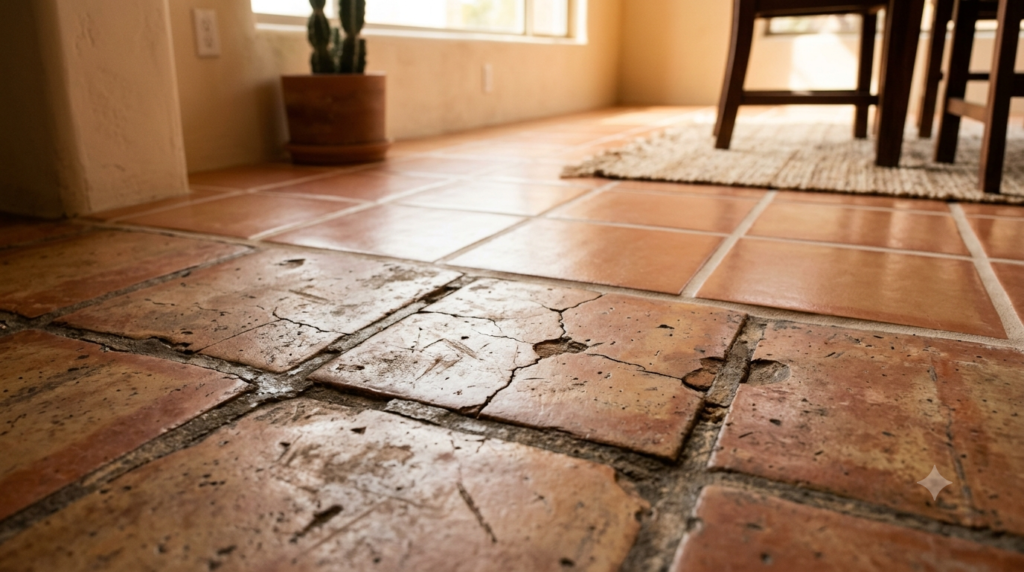
You scrub the grout again.
For a day or two, everything looks better. Then the same stained grout lines, worn surfaces, and outdated colors return, making your floors look older than they really are.
The truth is that tile and grout don’t last forever.
Once they reach the end of their lifespan, no amount of cleaning can restore them to their original condition.
This guide explains how to recognize when it’s time to replace your tile, which materials work best in Arizona homes, and how to avoid common mistakes that turn a simple flooring project into an expensive repair.
Repair or Replace: How to Know When It’s Time for New Tile
Not every tile issue requires a full replacement.
However, certain warning signs indicate the problem goes beyond routine maintenance.
Sign #1: The Spiderweb Crack Pattern
A single cracked tile isn’t always a major concern.
However, when cracks begin spreading across multiple tiles in a web-like pattern, the problem is often beneath the surface.
This usually indicates:
- Subfloor movement
- Structural shifting
- Improper installation
- Foundation settlement
Once cracks begin spreading throughout the floor, replacement is often the most effective long-term solution.
Sign #2: Grout That Crumbles During Cleaning
Healthy grout should remain solid during normal cleaning.
If grout:
- Breaks apart
- Turns powdery
- Washes away
- Falls out of joints
water may already be reaching areas below the tile surface.
At that point, cleaning products won’t solve the underlying problem.
Sign #3: Water Stains Around Tile Areas
Water stains near:
- Bathrooms
- Showers
- Kitchens
- Laundry rooms
often indicate moisture intrusion.
Ignoring these signs can allow hidden damage to spread behind walls or underneath flooring.
Sign #4: Loose or Hollow-Sounding Tiles
Tiles should feel solid underfoot.
If they:
- Move slightly
- Sound hollow
- Shift when stepped on
the bond between the tile and substrate may be failing.
This issue rarely improves on its own.
Sign #5: Outdated Flooring That Ages the Entire Home
Sometimes the problem isn’t structural.
It’s visual.
Older tile styles can make an otherwise well-maintained home feel dated.
Common examples include:
- Small beige square tiles
- Outdated color combinations
- Busy decorative patterns
- Worn finishes
Updating old flooring can dramatically improve both appearance and buyer perception.
Choosing the Right Tile Material for Arizona Homes
Once replacement becomes necessary, selecting the right material is just as important as proper installation.
Porcelain Tile
Best For:
- Bathrooms
- Kitchens
- High-traffic areas
- Whole-home flooring
Advantages:
- Extremely durable
- Water resistant
- Low maintenance
- Excellent for Arizona’s climate
For most Arizona homeowners, porcelain remains the safest and most versatile flooring choice.
Ceramic Tile
Best For:
- Backsplashes
- Accent walls
- Lower-traffic areas
Advantages:
- Affordable
- Easy to maintain
- Available in many styles
Ceramic works well in certain applications but is generally less durable than porcelain.
Natural Stone
Best For:
- Luxury bathrooms
- Entryways
- High-end custom homes
Advantages:
- Unique appearance
- Premium aesthetic
- Strong resale appeal
Considerations:
- Requires regular sealing
- More maintenance
- Higher installation costs
Material | Best Application | Durability | Maintenance |
Porcelain | Bathrooms, kitchens, floors | Very High | Low |
Ceramic | Walls, backsplashes | Moderate | Low |
Natural Stone | Luxury spaces | High | High |
The Reality of DIY Tile Installation
Many homeowners consider installing tile themselves to save money.
While DIY installation is possible, mistakes can become expensive.
Uneven Tile Surfaces (Lippage)
Improper leveling creates tile edges that sit higher than neighboring tiles.
This can lead to:
- Trip hazards
- Poor appearance
- Premature wear
Waterproofing Failures
In bathrooms and showers, waterproofing is often more important than the tile itself.
Improper waterproofing can result in:
- Mold growth
- Water damage
- Structural deterioration
The damage often remains hidden until repairs become costly.
Cracked Grout Lines
Poor surface preparation frequently causes grout to crack within months.
When the substrate isn’t stable, even the highest-quality grout can fail.
Professional installation helps eliminate these risks while protecting your investment.
What a Professional Tile Replacement Project Looks Like
Many homeowners assume tile replacement means weeks of disruption.
In reality, most projects follow a straightforward process.
Day 1: Demolition and Surface Preparation
Existing flooring is removed and the subfloor is inspected.
This step is critical because most future tile problems originate below the surface.
Days 2–3: Waterproofing and Tile Installation
In wet areas, professional contractors install waterproofing systems before setting tile.
Modern waterproofing membranes help protect:
- Subfloors
- Walls
- Framing components
from moisture intrusion.
Day 4: Grouting and Finishing
The final stage includes:
- Grout installation
- Sealing (when required)
- Cleanup
- Final inspection
While larger projects may require additional time, most standard bathroom and kitchen flooring projects move efficiently when planned correctly.
Why Arizona Homeowners Choose Porcelain Tile
Arizona’s climate presents unique challenges.
Homeowners often deal with:
- Hard water
- Temperature fluctuations
- High foot traffic
- Dust accumulation
Porcelain tile performs exceptionally well under these conditions because it offers:
- Superior durability
- Minimal maintenance
- Water resistance
- Long lifespan
For many Arizona homeowners, it’s the most practical flooring investment available.
Key Takeaways
- Cracked tile, loose flooring, and crumbling grout often indicate replacement is needed.
- Porcelain tile remains the preferred choice for most Arizona homes.
- Outdated flooring can negatively affect both aesthetics and resale value.
- Proper waterproofing is essential in bathrooms and wet areas.
- Professional installation helps prevent costly future repairs.
The Bottom Line
You see your floors every day.
Cracked tile, deteriorating grout, and outdated flooring don’t just affect appearance—they can signal larger problems developing beneath the surface.
Replacing worn flooring improves comfort, appearance, functionality, and long-term home value.
Unique Services Contractor Co LLC specializes in residential tile replacement and flooring upgrades throughout Arizona. From bathrooms and kitchens to entire-home flooring projects, our team helps homeowners choose durable materials and professional installation methods designed for long-lasting performance.
Contact Unique Services Contractor Co LLC today to schedule a free in-home design consultation and discover how new tile can completely transform your space.
Widespread cracking, loose tiles, moisture intrusion, and extensive grout deterioration often indicate tile replacement is the better long-term solution.
Yes. Porcelain is generally stronger, denser, and more water resistant than ceramic.
In some situations, yes. However, the existing flooring and substrate must be carefully evaluated first.
Improper waterproofing and inadequate surface preparation are among the most common causes of failure.
Many standard projects can be completed in several days, although larger installations may require additional time.
Updated flooring often improves buyer perception and helps homes feel newer and better maintained.
Grout deterioration may result from moisture intrusion, substrate movement, age, or installation issues.
Porcelain tile is widely considered one of the best options because of its durability, moisture resistance, and low maintenance requirements.